




.png&w=1200&q=100)



Why AI fails

Hallucinations
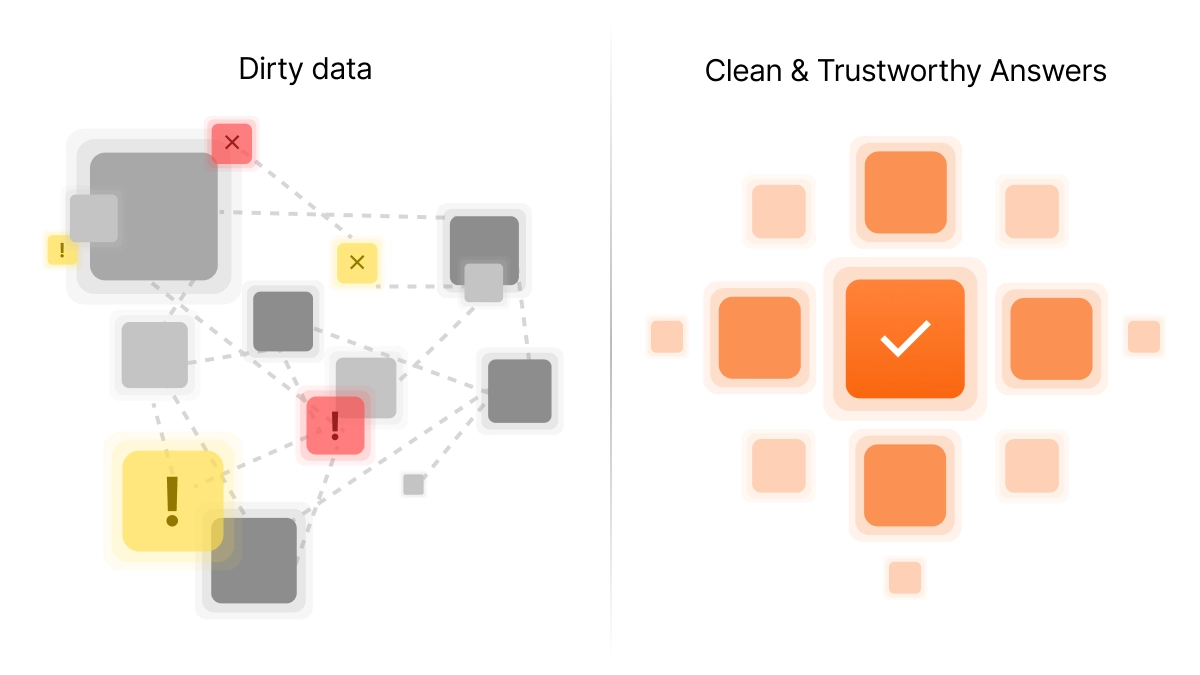
AI invents definitions it doesn't know. If the model doesn't have access to governed context or verified data, it might give answers that sound right but aren't.

Inconsistent Answers
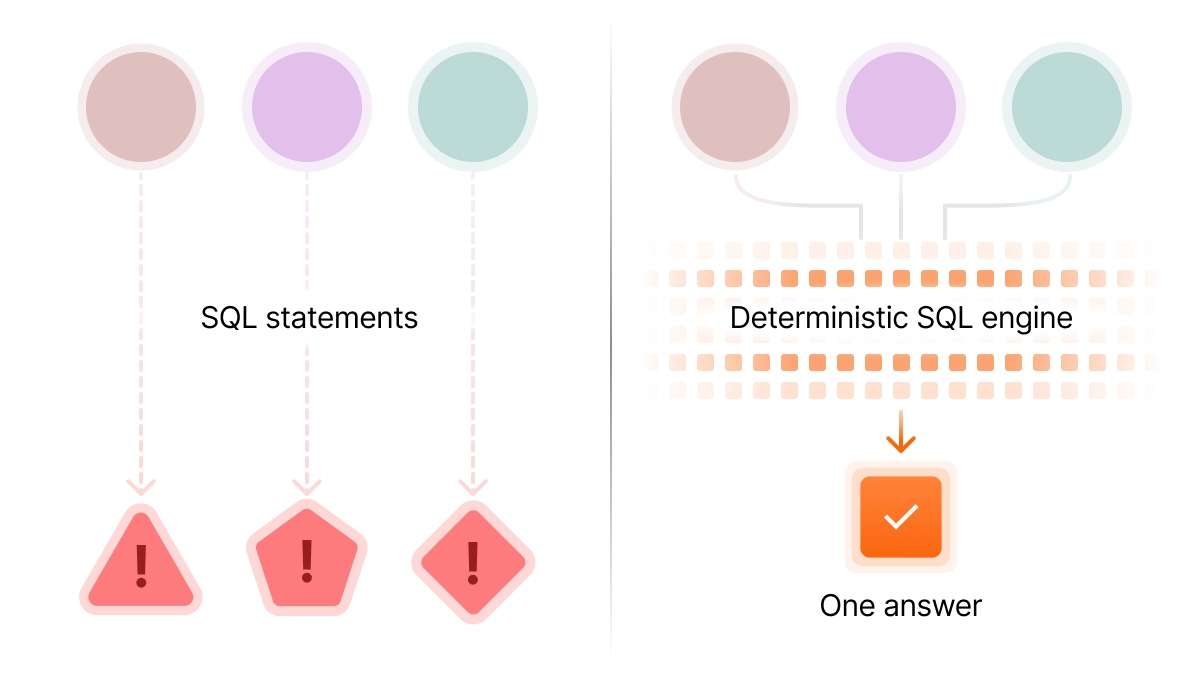
The same request returns different information every time it's asked. When the model writes its own query, you get different numbers from the same data.

Ungoverned AI
Without access controls applied to it, an agent can surface a record to the wrong person or expose sensitive fields.
Hallucinations stop
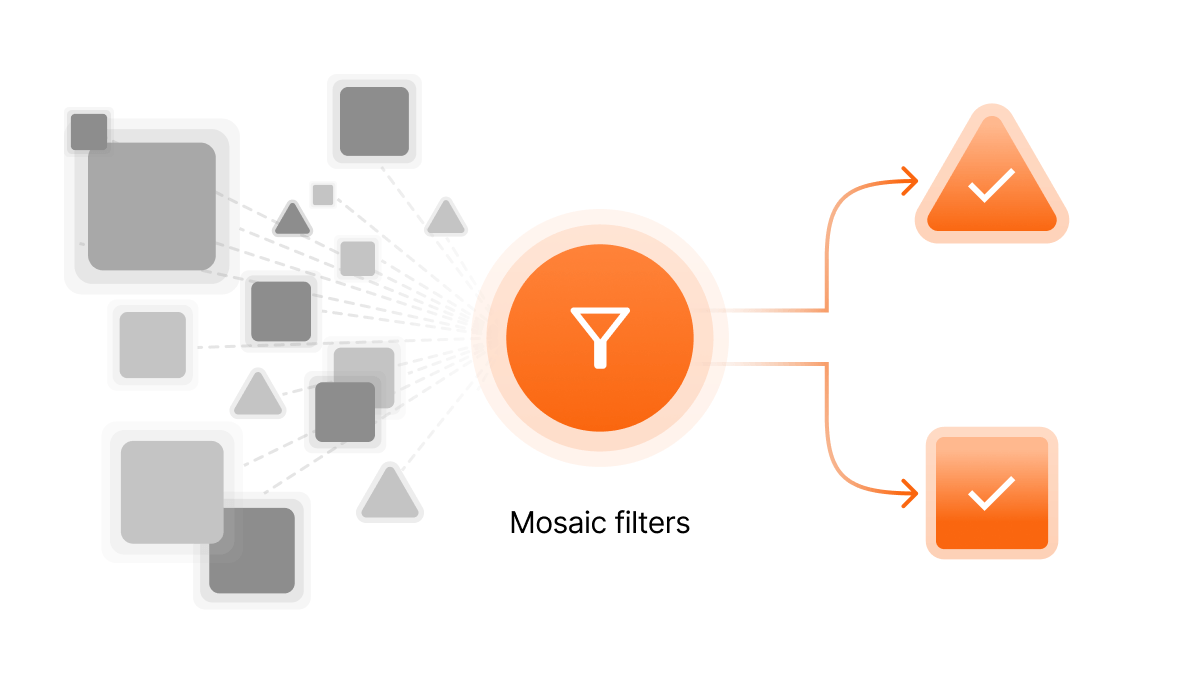
Mosaic gives every model one governed definition of revenue, a customer, or churn to work from, so it answers from verified logic instead of inventing it.
The same answer, every time
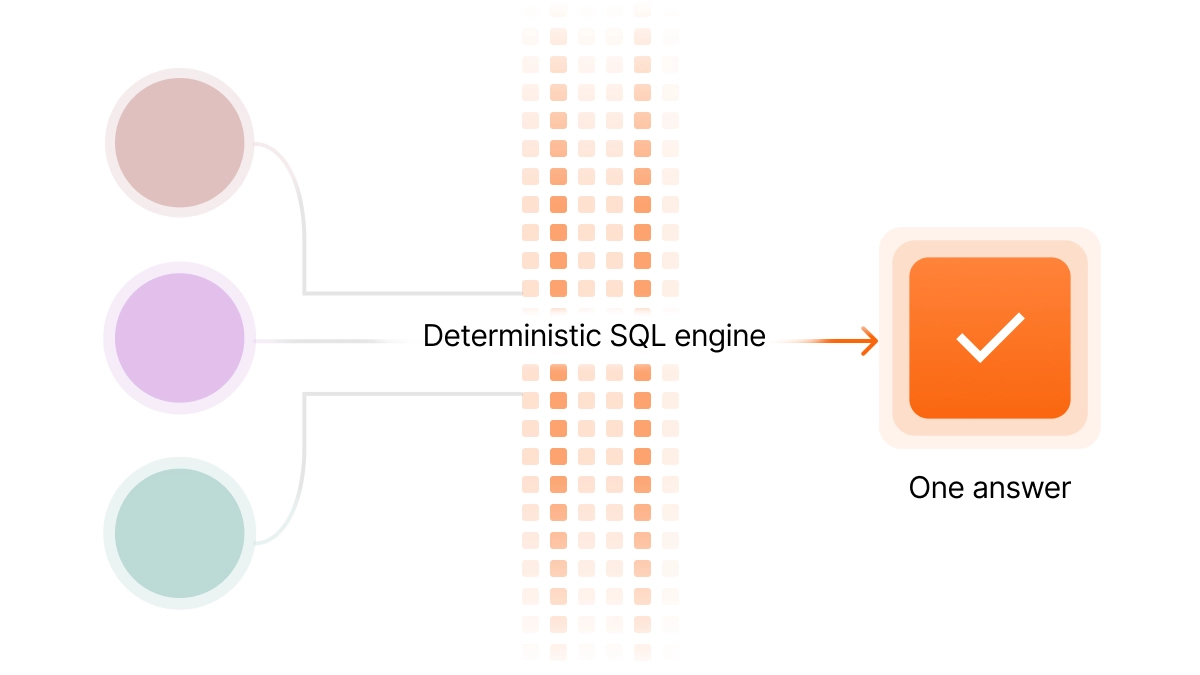
The model handles the language. Mosaic handles the query. Its deterministic SQL engine means the same question returns the same result for every model, every team, and every tool.
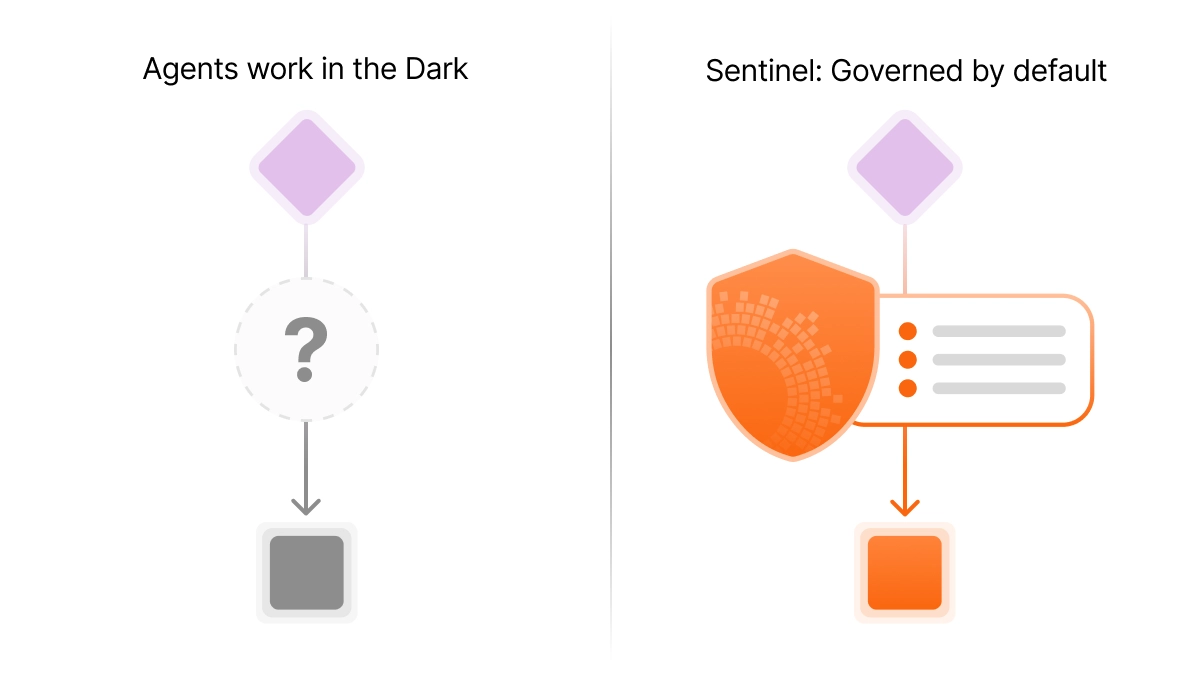
Governed by default
Every query runs through your access controls before it returns anything. Sentinel logs who asked, what data it reached, and what it cost.
Govern your definitions once. Use them everywhere.
Mosaic is a universal semantic layer that sits between your data sources and your tools. It turns raw database tables into certified, governed business concepts that every tool and agent shares.
The model handles the language. Mosaic handles the query.
Unlike a model's probabilistic guesswork, Mosaic's deterministic SQL engine means the same question always produces the same query, and the same answer, every time, for every model and every user.





Stack-specific ROI estimate
On consumption-based cloud contracts, Mosaic deflects redundant queries away from the warehouse. See your stack-specific savings estimate.
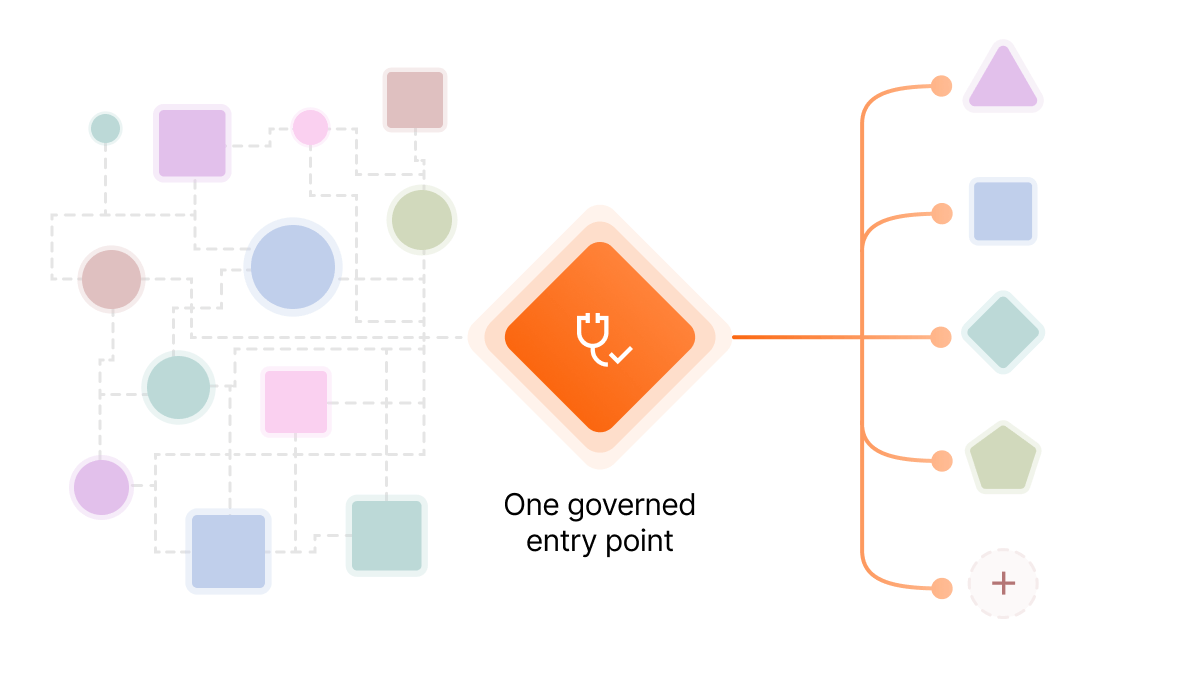
Technical integration plan
One governed entry point for every AI tool through Mosaic's MCP server. Approve the architecture once. Every future agent uses the same path.
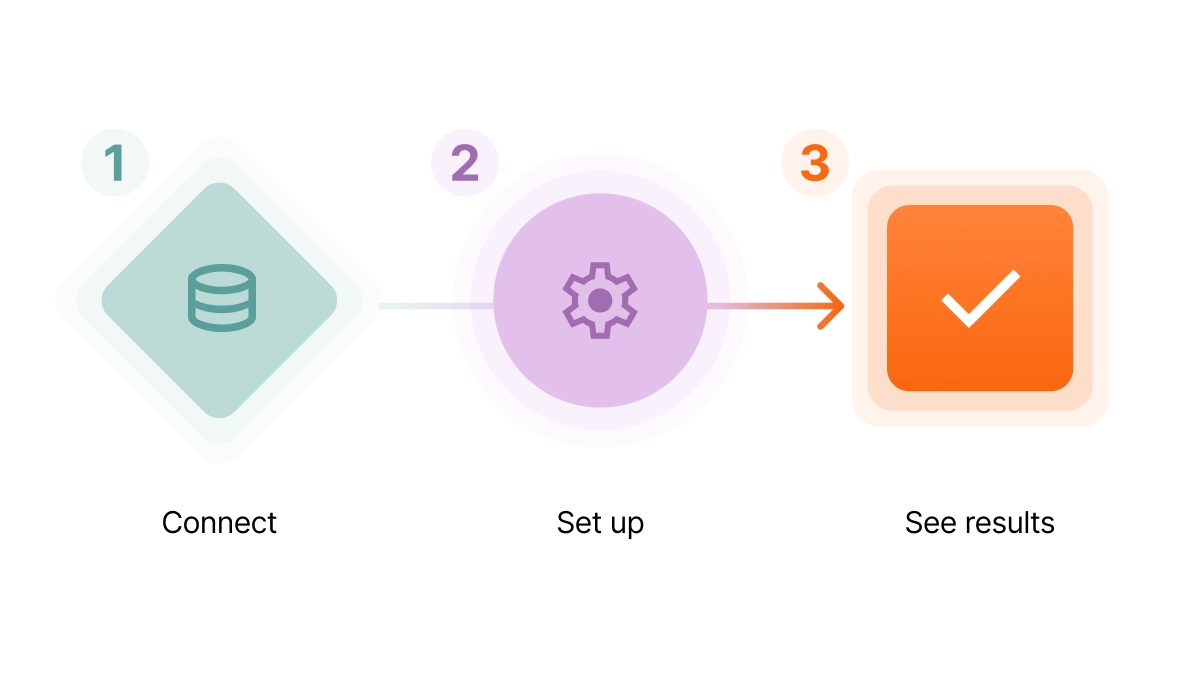
Proof-of-value pilot
Connect your warehouse, model your first use case, and see governed answers in your own tools within weeks.
What is a universal semantic layer, and where does Mosaic fit?
It is the single source of truth for your data definitions. Revenue means the same thing whether it is calculated in your warehouse, analyzed in a BI tool, or queried by an AI agent. Mosaic sits above your data sources and beneath your tools, so the definition travels everywhere and the data never moves.
How is Mosaic different from the semantic layers in Snowflake or Databricks?
Those are built to keep you inside one platform. Definitions created there do not travel cleanly to other tools or to your AI agents without custom work. Mosaic is independent. Run Snowflake and Databricks at once, or migrate between them, and your logic stays exactly as it was.
How is Mosaic different from AtScale, Cube, or the dbt Semantic Layer?
Those are capable tools, and like Mosaic they are open and connect to AI agents. The difference is proof and depth. Mosaic has run enterprise semantics in production for 35 years, at Fortune 500 scale, handling fiscal calendars, multi-currency, and enterprise security that newer tools are still building toward. We also publish the conditions behind our accuracy and cost benchmarks, and Mosaic is a full platform rather than a headless layer you wire to everything else.
Is Mosaic a data catalog like Collibra or Atlan?
No. A catalog documents your data. Mosaic governs and executes the query at runtime. When an AI agent asks a question, a catalog never sees it. Mosaic generates the governed answer.
Does Mosaic replace my BI tools or my warehouse?
No. Your data stays where it lives and your teams keep their tools. Mosaic governs the definitions underneath all of them. If you later change a BI tool or warehouse, your logic travels with you. (Comparison links: Power BI, BusinessObjects, Cognos.)
Can Mosaic serve both BI and AI?
Yes, and that is the point. Through Mosaic's MCP server, agents built on Claude, Copilot, Gemini, and others query the same certified definitions your dashboards use. Every consumer, human or machine, works from one governed source.